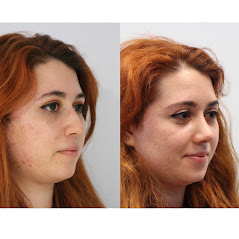
The nose occupies a central place in the face, significantly influencing facial harmony. When there is dissatisfaction with its shape or size, rhinoplasty is an effective option to reshape it and improve facial aesthetics.
If you are dissatisfied with its shape or size, rhinoplasty is an effective option to reshape it and improve facial aesthetics.
In recent years, ultrasonic rhinoplasty has gained popularity as an innovative technique that promises precise and less invasive results. However, the question arises: how do these two techniques differ and which one is ideal for each case?
1. Surgical technique: The differentiating factor
The main difference between traditional rhinoplasty and ultrasonic rhinoplasty lies in the technique used to sculpt the nasal bones:
- Traditional rhinoplasty: In this procedure, the surgeon uses chisels and hammers to reshape the nasal bones. This technique requires greater precision and experience on the part of the surgeon, as it involves greater trauma to the tissues.
- Ultrasonic rhinoplasty: In this innovative technique, an ultrasound device that emits high-frequency vibrations is used to sculpt the nasal bones more precisely and gently. This allows for less tissue trauma, reducing bleeding, swelling and recovery time.
2. Advantages and disadvantages: Considerations to be taken into account
Rinoplastia tradicional:
Advantages:
- This technique is widely used and has proven results.
- Allows complex corrections to be made.
Disadvantages:
- Increased tissue trauma, which can lead to more bleeding and inflammation.
- Longer recovery time.
- Increased risk of complications.
Rinoplastia ultrasónica:
Advantages:
- Less tissue trauma, reducing bleeding, swelling and recovery time.
- Greater precision in the modelling of the nasal bones.
- More natural and aesthetic results.
Disadvantages:
- It is not always suitable for complex corrections.
3. Which one to choose? The decision is best left to your doctor.
The choice between traditional rhinoplasty and ultrasonic rhinoplasty will depend on several factors, such as the complexity of the desired correction, the patient’s preferences and the surgeon’s experience.
In general, ultrasonic rhinoplasty is recommended for cases requiring simple to moderate corrections, as it offers a less invasive procedure and faster recovery. However, for complex corrections or cases with structural abnormalities, traditional rhinoplasty may be the more appropriate option.
It is essential to consult an experienced and qualified maxillofacial surgeon so that, after a thorough evaluation of your case, he or she can recommend the most appropriate technique to achieve the desired results and ensure your safety and satisfaction.
Remember: Rhinoplasty, whether traditional or ultrasonic, is a surgical procedure that requires a high degree of experience and precision. Make sure you choose a surgeon you trust and who has proven experience in this type of procedure.