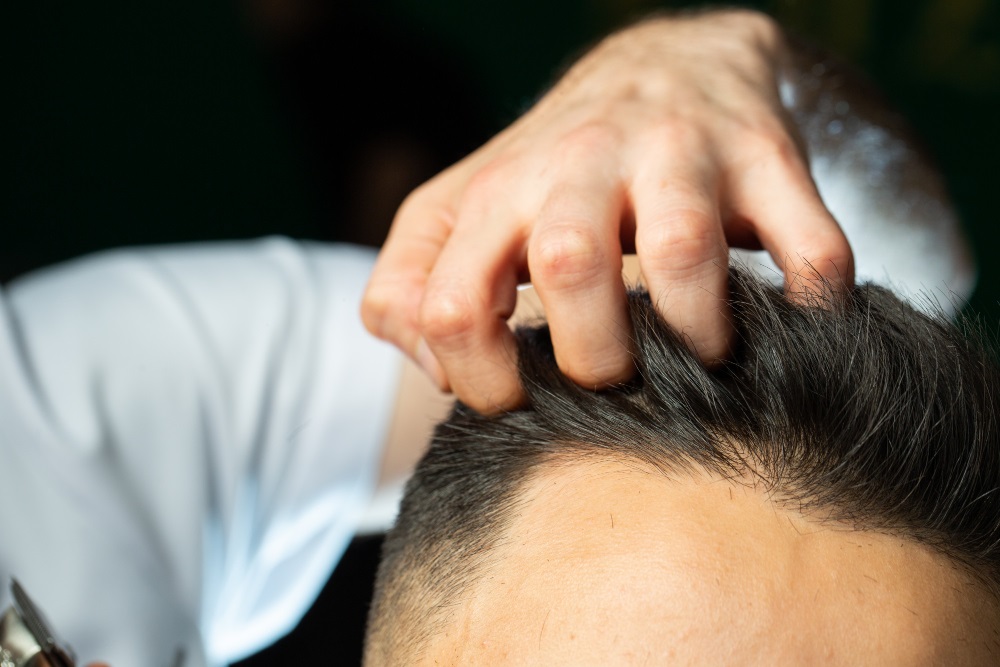
Hair loss rarely happens overnight. It usually begins gradually: more hair left in the shower, less volume when styling, a subtle recession at the temples. It’s at this stage—when recovery is still possible—that PRP hair treatment (Platelet-Rich Plasma) becomes one of the most effective tools in aesthetic medicine.
At Clínica Pérez Villar, a medical and aesthetic surgery clinic based in Santander, this treatment is always approached from a medical perspective, with a prior diagnosis to tailor the protocol to each patient.
A treatment that doesn’t add anything artificial, but activates your own biology
PRP hair treatment doesn’t rely on drugs or synthetic substances. Instead, it uses your body’s own growth factors to stimulate the hair follicle.
A small blood sample is taken and processed to concentrate platelets. These contain proteins involved in tissue regeneration. When injected into the scalp, they help reactivate weakened follicles that are not yet permanently inactive.
This is why PRP works best in early or moderate stages of hair loss. It doesn’t create new follicles, but it can significantly improve hair quality, thickness, and strength.
When PRP hair treatment is worth considering
One of the most common questions is not how PRP works, but whether it’s the right option for a specific case.
PRP is particularly effective for patients experiencing early hair thinning, increased shedding, or reduced density. It is also frequently recommended after hair transplant procedures to enhance results and improve hair quality.
In more advanced stages of hair loss, PRP may still play a role, but usually as part of a combined treatment approach.
What the procedure looks like
The treatment itself is straightforward and performed in the clinic. No surgery or downtime is required.
A blood sample is taken, then centrifuged to isolate the platelet-rich plasma. This concentrated solution is injected into targeted areas of the scalp using microinjections.
The session typically lasts between 30 and 45 minutes, and patients can return to their normal routine the same day.
Results: understanding realistic timelines
One of the key aspects of PRP treatment is managing expectations. Results are not immediate.
In the first few weeks, patients usually notice a reduction in hair shedding. Around the third month, improvements in hair quality become more visible. Increased density, when it occurs, develops gradually over time.
For this reason, PRP should be understood as a progressive treatment. It typically involves an initial set of sessions followed by maintenance treatments.
Not a replacement, but a complementary approach
PRP hair treatment is often combined with other therapies such as minoxidil or finasteride. These treatments work through different mechanisms.
While pharmacological treatments target hormonal or biochemical pathways, PRP focuses on biological regeneration. When properly combined, they often deliver better results than any single treatment alone.
PRP for hair vs PRP for skin: same concept, different goals
Although both treatments use platelet-rich plasma, their purpose is different.
PRP facial treatments aim to improve skin quality, texture, and collagen production. PRP hair treatment, on the other hand, targets the hair follicle to stimulate growth.
If you’re interested in the facial approach, you can read more in our PRP facial article.
A realistic option to slow down hair loss
PRP hair treatment is not a miracle solution, but it is far from a passing trend. When properly indicated and performed, it can make a meaningful difference in the progression of hair loss.
In early stages, it helps slow down shedding and improve density. In more advanced cases, it can be part of a combined strategy to optimize results.
Ultimately, the key question is not whether PRP works in general, but whether it is the right treatment for each individual case.